Living life surrounded by junk can be hugely taxing. You might not even notice the effect that clutter is having on your state of mind – but in the long term, for many people, all of that untidiness can have a major effect.
It might not be obvious why this should be. Why is an empty, spotless hallway satisfying in a way that the same space isn’t when it’s filled with discarded shoes, bags, books, and boxes? There are several plausible explanations.
Why Clutter Feels So Overwhelming
Human beings continually and subconsciously assess their environments. Something might catch your attention in your peripheral vision, forcing you to either turn away from what you’re doing, or expend mental energy in ignoring the distraction.
In a cluttered space, distraction can take many forms. This means that we have to expend lots more energy to keep our attention on the things that we’d like to attend to. This can lead to a phenomenon known as ‘decision fatigue’, which describes how our ability to pay attention is depleted when we spend mental energy making decisions – about a variety of things, including where we direct our attention.
The Hidden Mental Load We Carry at Home
Clutter often stems from the same mental pathways as procrastination. We have a task that we’d rather not think about, and so we find ways of delaying it. The difference is that, in the case of clutter, we have a lasting reminder of the undone task. This can lead to an emotional burden. We might continually feel inadequate, because we’ve failed to tidy up. Some members of the household might feel this burden more sharply than others, which can lead to long-running disputes.
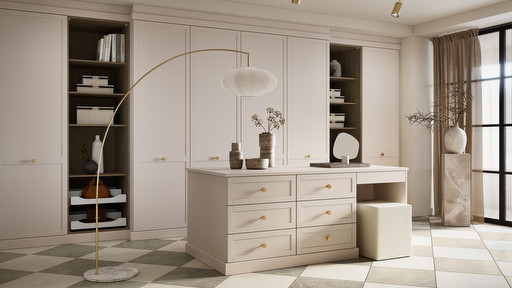
One solution to this is to provide yourself with more space in which to store things. This is where bespoke furniture can be so worthwhile. Practical storage, such as fitted wardrobes or tailored solutions from Hammonds, can take a load off your mind.
Creating Space That Supports Your Mind, Not Just Your Stuff
You might not consider a tidy home to be a mental health priority. And this is understandable. In fact, in many cases, obsessing over tidiness can actually lead to inferior mental health outcomes.
But it’s fair to say that a few tweaks in the way you keep your house tidy can lead to significant gains in the long run. Think about how you’re going to get the most from your storage, and the small changes you can make each week to develop the right habits.
Often, it’s consistency over weeks and months that generates tangible change.